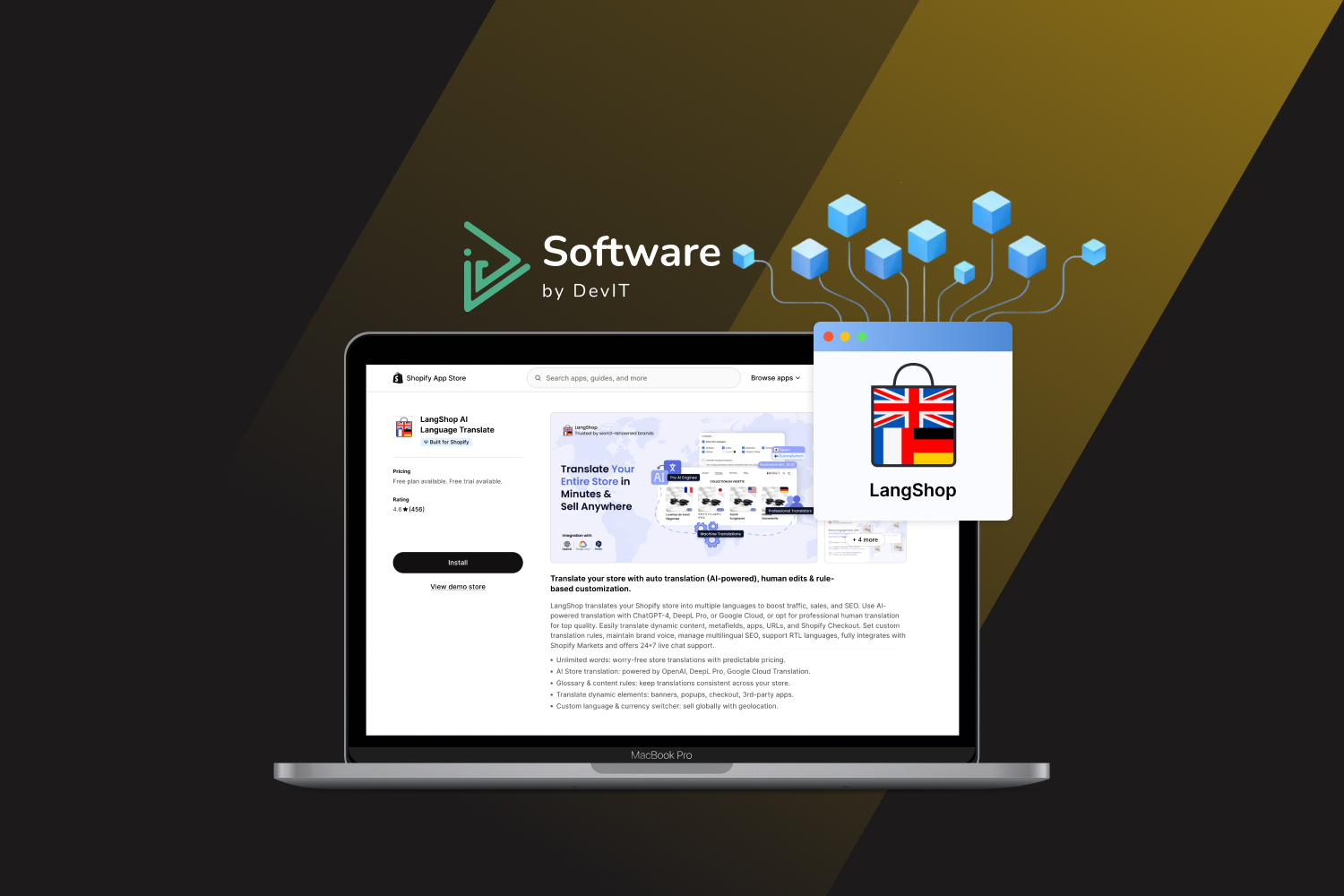
What happens when a simple client request exposes a massive gap in a multi-billion-dollar ecosystem? For the team behind LangShop, it was the start of a five-year journey that redefined Shopify localization and birthed a powerhouse product company: DevIT.Software.
Beyond the Billable Hour: Spotting a Gap in the Global Market
In 2016, our team was a compact agency of 30–40 people, focused entirely on client services. The "Eureka" moment didn't happen in a boardroom — it happened in a support ticket. A client needed their Shopify store to be multilingual, but the platform offered no native support.
At the time, the market was a duopoly of compromise. If you wanted a multi-language store, you only had two real options:
- Langify: A tool that manually "hacked" the store's code (Liquid). It was technically functional but messy; it often broke site themes and left random strings of text untranslated, creating a "broken" look for shoppers.
- Weglot: A service that used JavaScript to swap text on the fly. While easier to set up, it was a nightmare for SEO because search engines struggled to read the translated content. It also caused a "flicker" in which users saw the original language for a second before it swapped, which hurt the store's professional feel.
We saw a third way: a stable, SEO-friendly solution deeply integrated into the Shopify architecture, without the "flicker" or messy code.
The Lean MVP: Two People and a High-Stakes Experiment
The first MVP was a lean operation, created by just one developer and a CEO who acted as the PM, PO, and QA tester. To avoid the "code-breaking" reputation of apps like Langify, LangShop v1 used a "Theme Cloning" strategy.
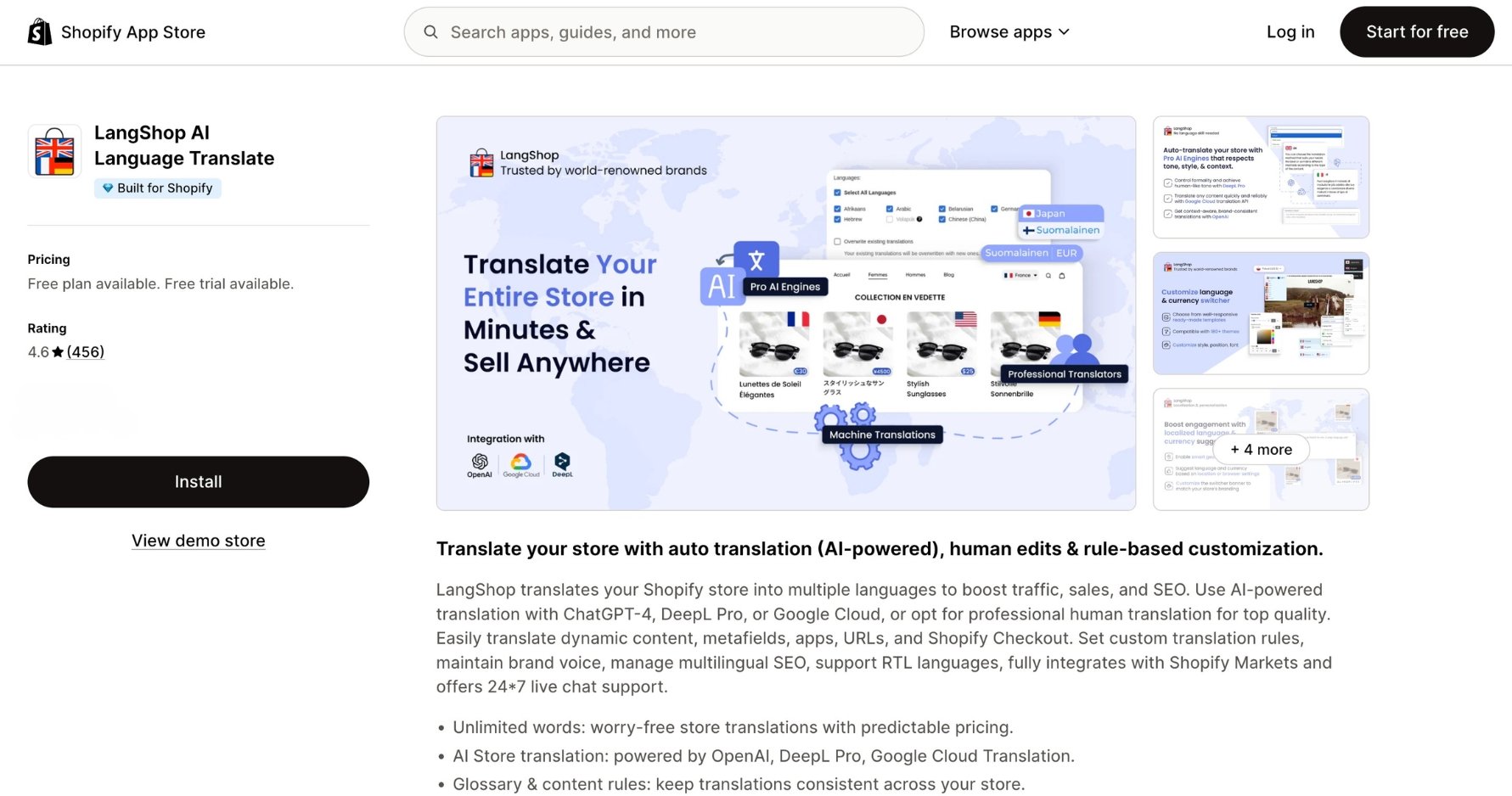
Instead of editing a client's live site, the application created a hidden, localized copy of the store’s theme. We then injected logic into that copy to instantly swap languages. Built on a backend of Phalcon and a frontend of Angular v2, the app focused on speed and automation. We introduced Mass Translations — a feature competitors lacked — allowing users to connect their own Google Translate or DeepL API keys to translate thousands of products in minutes.
Solving the "Flicker": Clean Code Over Quick Fixes
As users brought us increasingly complex store designs, we had to innovate beyond simple parsing. We developed two "life-saver" features:
- Dynamic Replacements: This was our "safety net." If a piece of text was hard-coded so deeply that the app couldn't find it, this tool allowed for a "find and replace" logic right before the page loaded in the browser.
- Image Localization: We realized global marketing isn't just about text. We enabled users to swap out banners and promotional images based on the visitor’s language—ensuring a French customer saw a French banner, not just French text next to an English image.
The Radical Pivot: LangShop v2 (2018-2019)
In 2018, Shopify invited us into an exclusive circle of partners to test their new Localization API — a direct way for apps to talk to Shopify's core. We faced a choice: patch our old code or burn it down and start fresh. We chose the latter.
We moved to a modern stack — Laravel and React.js — using Shopify Polaris to ensure the app felt like a native, "official" part of the Shopify admin. The most critical technical feat was the "Seamless Switch." We built background workers to migrate years of translations from our old custom logic to Shopify’s new official system. Users woke up to a faster, cleaner interface without losing a single word of their data.
The official cooperation with Shopify immediately multiplied product adoption: before the integration, LangShop had about 800 users, and after the release, +200–300 new stores were onboarded almost instantly, resulting in a 2–3× growth in usage. This partnership proved how platform collaboration can trigger rapid, sustainable product growth.
Humanizing the Machine: The TextMaster Partnership
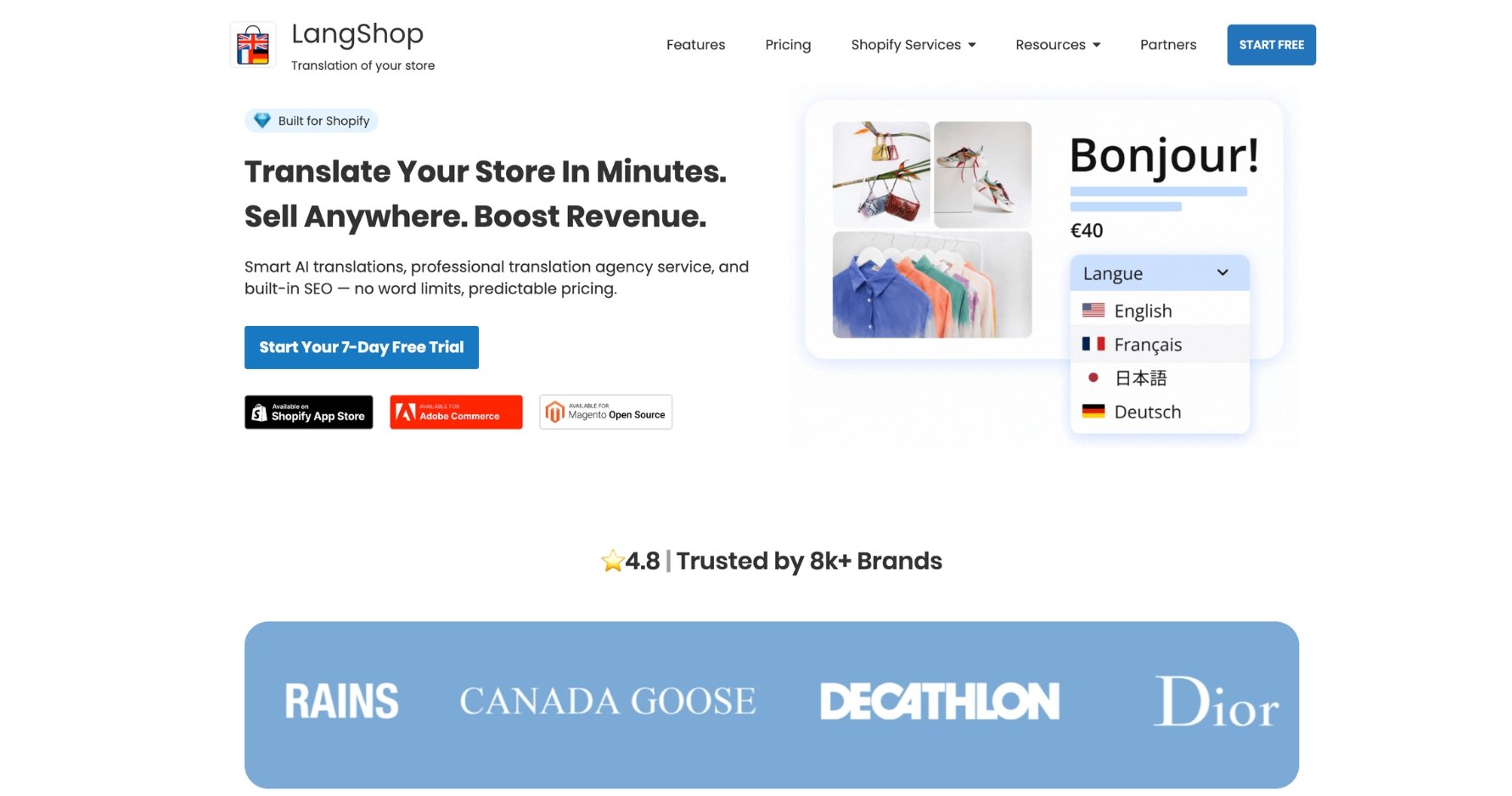
We eventually realized that for high-ticket e-commerce, machine translation wasn't always enough. LangShop became one of the first apps to integrate Human Translation directly into the interface. Through a partnership with the agency TextMaster, store owners could order professional human translations with one click. The content was sent via API and automatically returned to the app once finished, removing the need for manual copy-pasting or external contractors.
Why Selling Was the Ultimate Win
By 2021, LangShop had become a market leader, earning the coveted "Featured App" status from Shopify. However, Shopify also announced its own native tool, Translate & Adapt. Recognizing that the market was maturing and that competing with the platform itself would require infinite resources, we chose a strategic exit. LangShop was sold in 2021 for a significant multi-million dollar sum to investors.
The Birth of DevIT.Software: Using an Exit to Fuel a Powerhouse
This exit was not an end, but a beginning. The capital from the sale was used to create DevIT.Software — a completely independent product company with its own dedicated leadership, developers, and support staff.
Today, DevIT.Software stands as a testament to that first 2016 experiment. We’ve moved from an outsource model to a product-first culture, proving that with the right technical vision and a willingness to rebuild when the market shifts, a single support ticket can lead to a global success story.