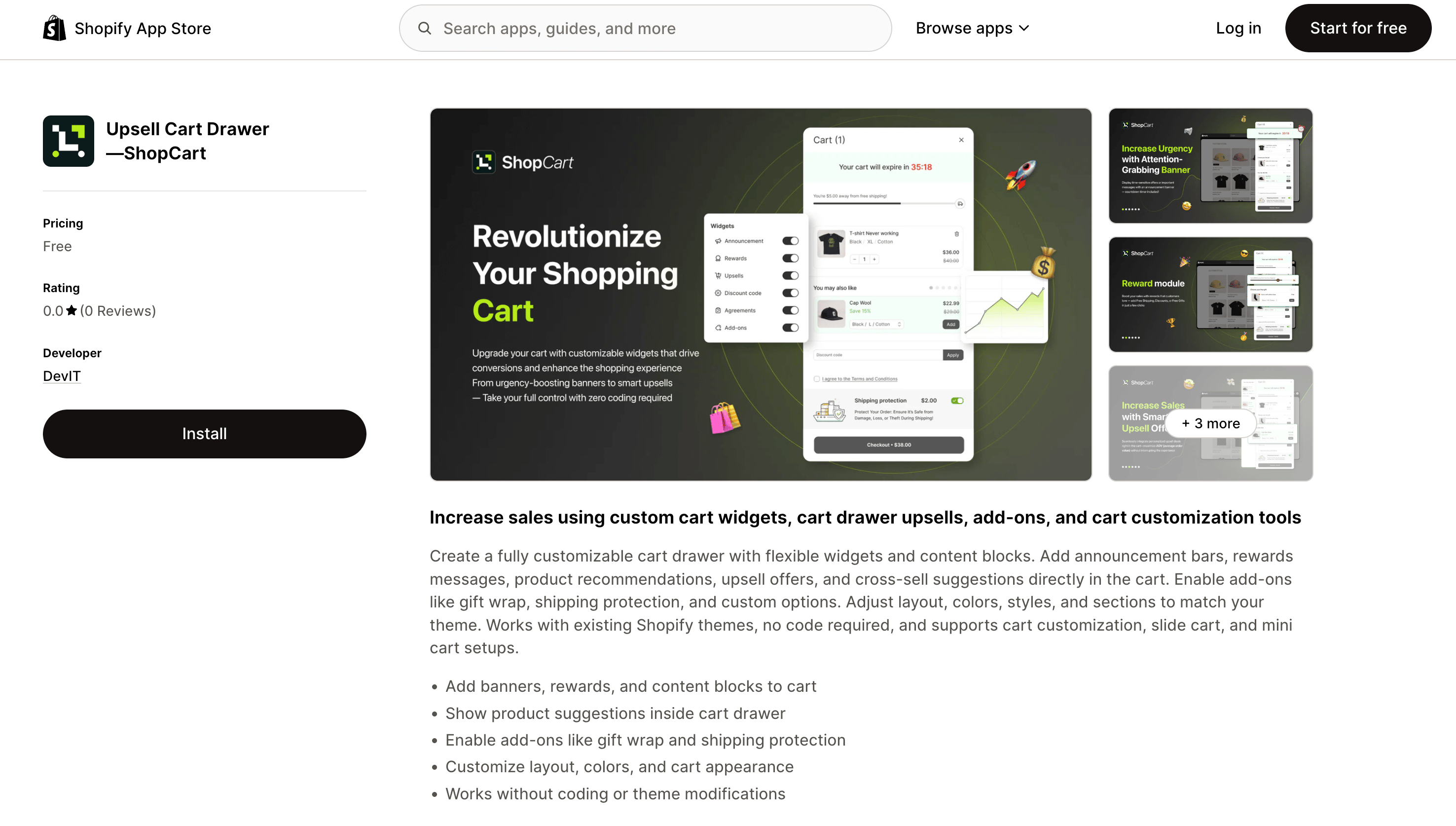


A Shopify cart drawer is often the most neglected part of a store. Merchants spend weeks on landing pages, while the cart stays a static, unbranded container that sends shoppers to checkout and does nothing else. We treated that as a product bug.
ShopCart is the Shopify cart drawer app we built to fix it. It turns the last step before checkout into a place that sells, with conversion rate optimization built into the architecture.
What a Shopify cart drawer app should do: raise AOV
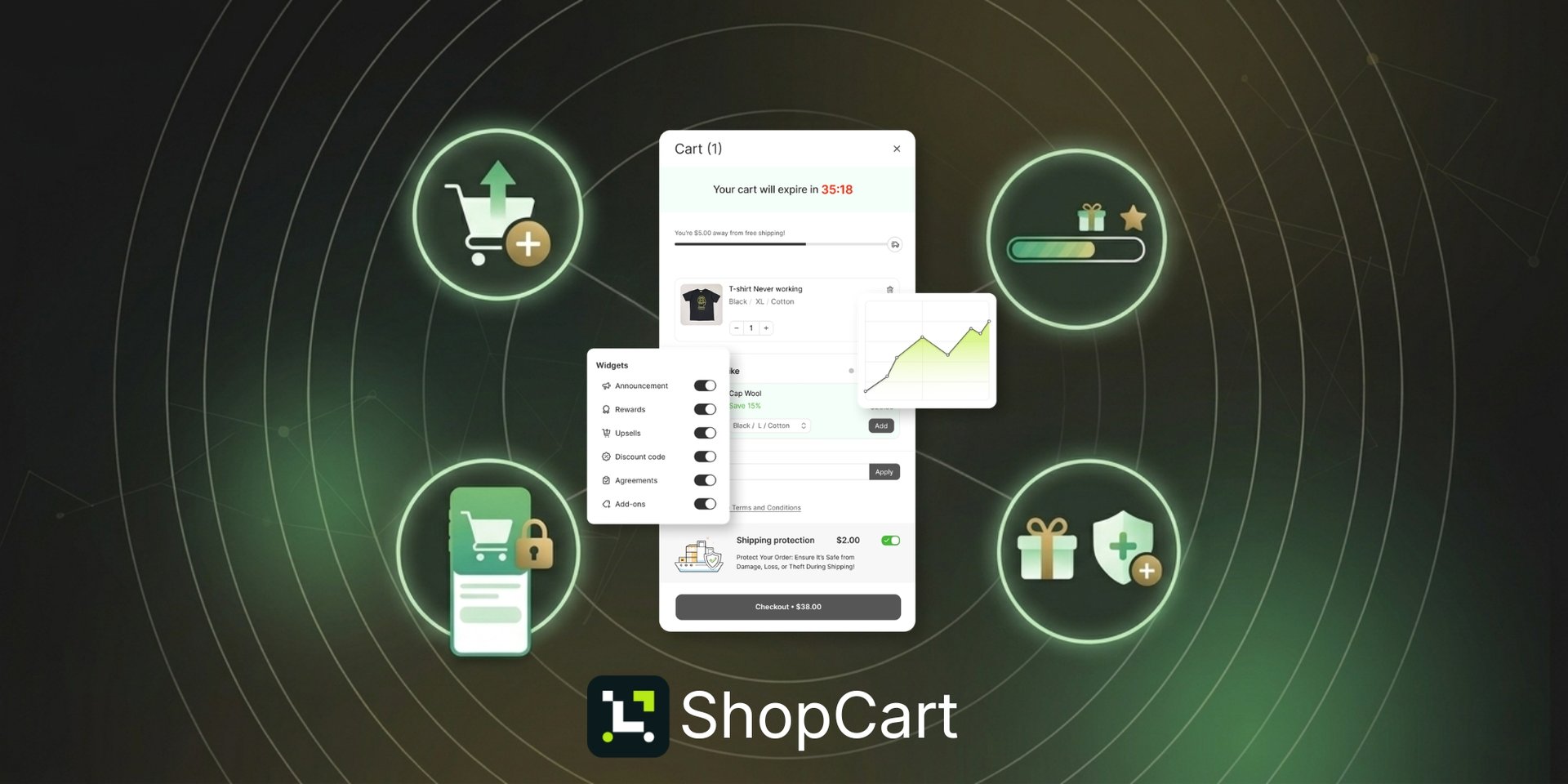
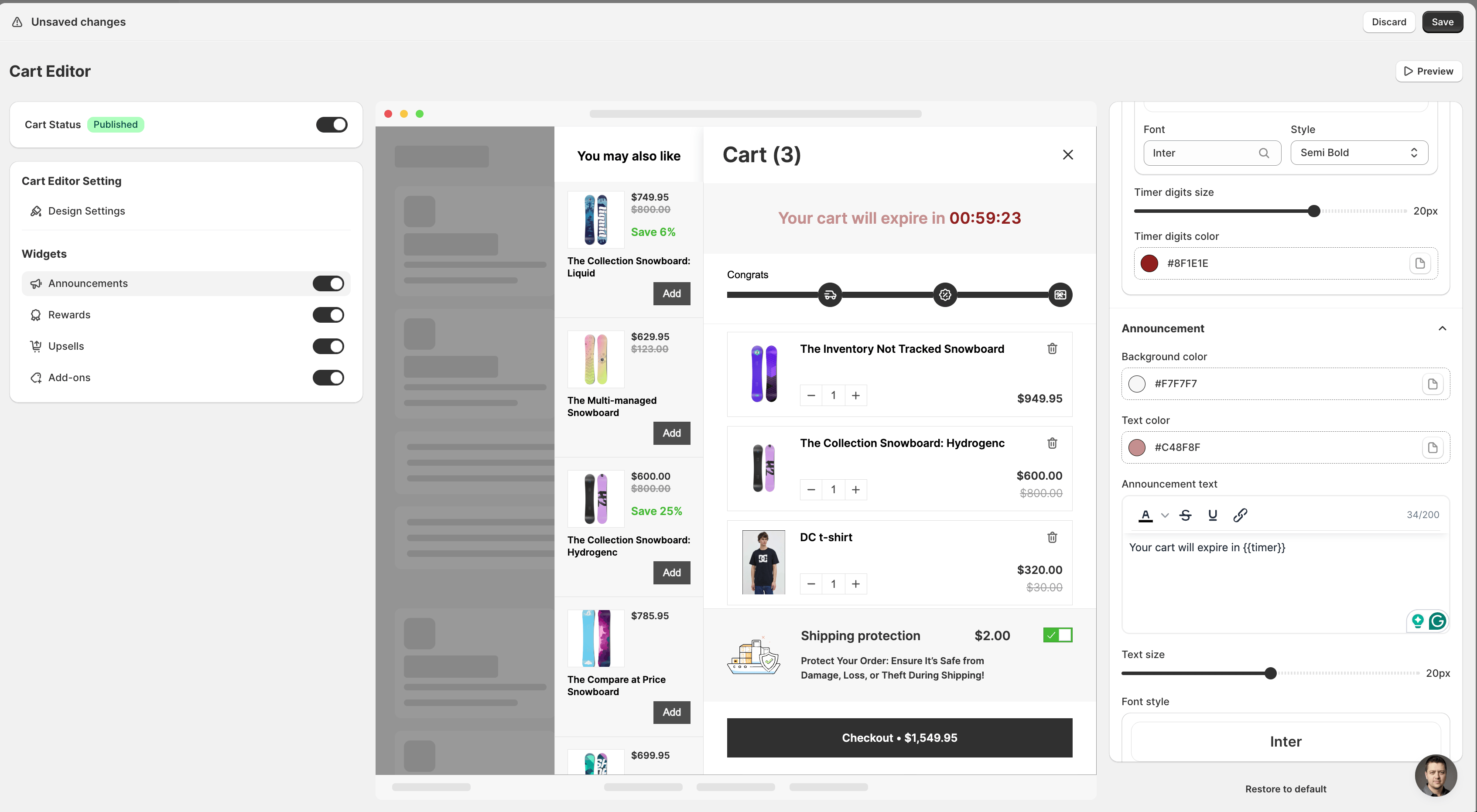
A cart should close the deal as well as hold items. ShopCart is a no-code tool that replaces manual theme edits with ready business logic:
- Contextual Upsells & Cross-sells: Placed at the peak of buyer intent to drive Average Order Value (AOV).
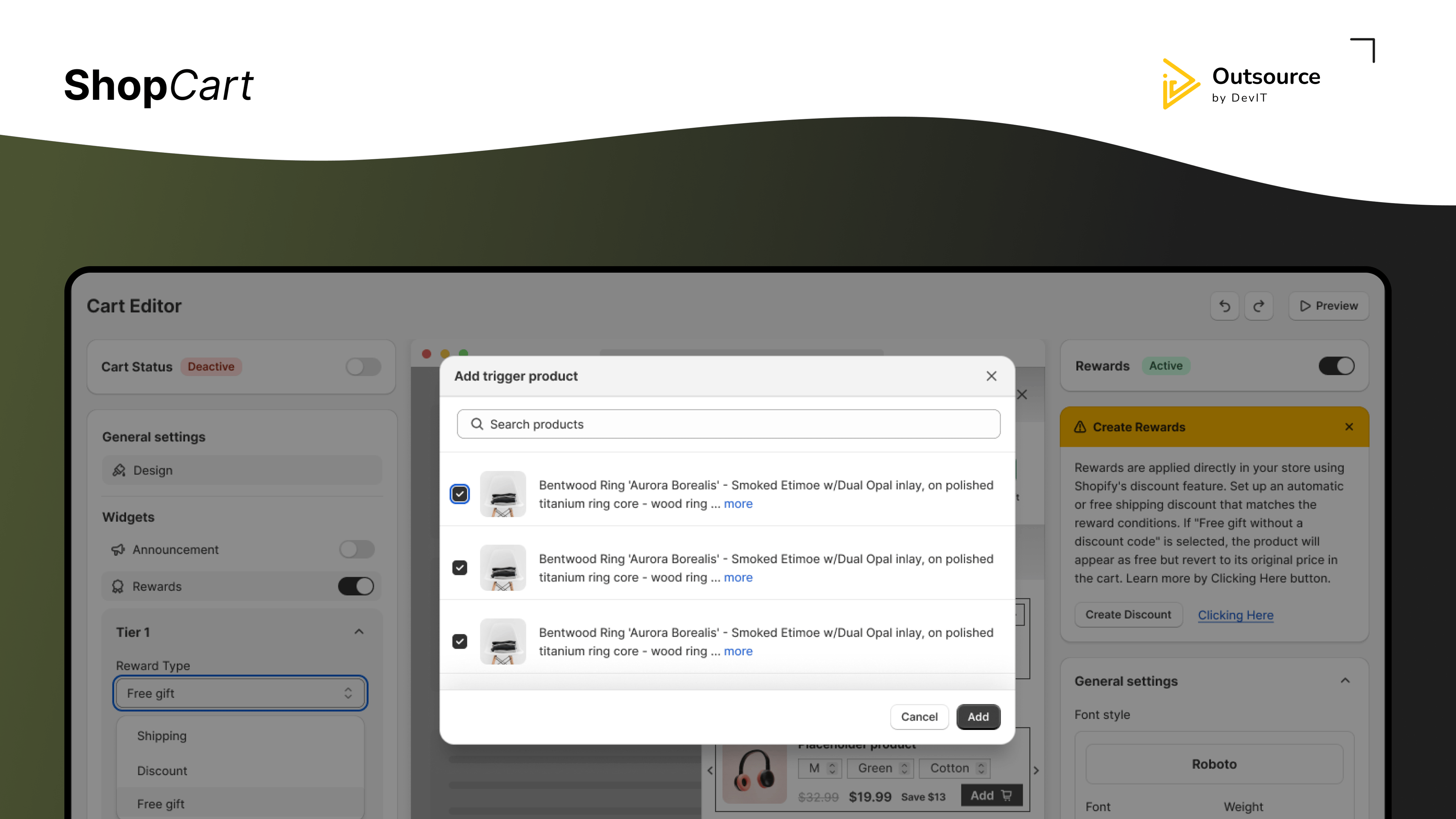
- Progressive Rewards: Gamifying the path to "Free Shipping" or "Bonus Gifts" with real-time trackers.
- Sticky Cart & Entry Control: A floating, high-visibility entry point that ensures the cart is never "lost" during long mobile scrolls.
How we built the cart drawer: the tech stack
We picked each tool for architectural reliability.
1. Remix + TypeScript + Prisma
The admin interface is built on Remix. In the Shopify ecosystem, state synchronization is the primary failure point. Remix ensures a server-driven architecture where merchant configurations stay synced with the Shopify Storefront API. On the backend, we utilized MongoDB with Prisma ORM to handle complex, nested widget data with strict type safety.
2. Native UX
We believe merchant tools should feel invisible. With Shopify Polaris, the app uses the same interface language as the Shopify admin, so store managers work with it like any other part of their dashboard.
3. The Storefront: Zero-Code Injection
We utilized Shopify Theme App Extensions to ensure a "Clean Room" installation.
- No Manual Code Changes: We do not inject code into your Liquid files. Uninstalling the app leaves your theme exactly as it was.
- Client-Side Execution: Logic executes directly on the extension side without dependence on server requests. This ensures the cart remains snappy even on low-bandwidth mobile connections.
Shipping with 100% team turnover
One of the most defining moments of ShopCart’s journey: The team that started the project wasn't the one that shipped it.
Midway through development, the engineering team rotated entirely. In most software projects, this leads to a "knowledge debt" that kills momentum. We survived because we treated documentation as a functional requirement. Because every architectural decision and API quirk was logged, the new team didn't have to "guess" the logic. They picked up the blueprint and kept moving. It proved our internal mantra: Code without documentation is a future bug.
What we cut from the MVP and why
During the MVP phase, we designed advanced widgets that would look great in marketing but would delay the launch by weeks. We cut them.
We measured success by time to value and focused on the essentials: Customizers, Rewards and Upsells. That gave merchants a stable, conversion-ready slide cart on day one, and the advanced widgets moved to later versions.
How ShopCart passed Shopify App Store review in under 24 hours
ShopCart passed Shopify's App Review in less than 24 hours. The usual wait is 10–14 days, and two things made the difference:
- Absolute Compliance: Total adherence to App Bridge and Polaris standards.
- Performance Audits: Meeting Shopify's rigorous "Time-to-Interactive" benchmarks before submission.